
Crawl space vapor barrier installation in Charlotte runs $1,200–$2,500 for proper work: reinforced 10–20 mil material, taped seams, sealed pier wraps, full coverage. NC research measured vented Piedmont crawls above 80% RH through spring and summer — and the ground beneath them is the first moisture source to shut off.
What the barrier does, what separates real work from a liner, and where it fits the sequence.
The ground is the humidifier
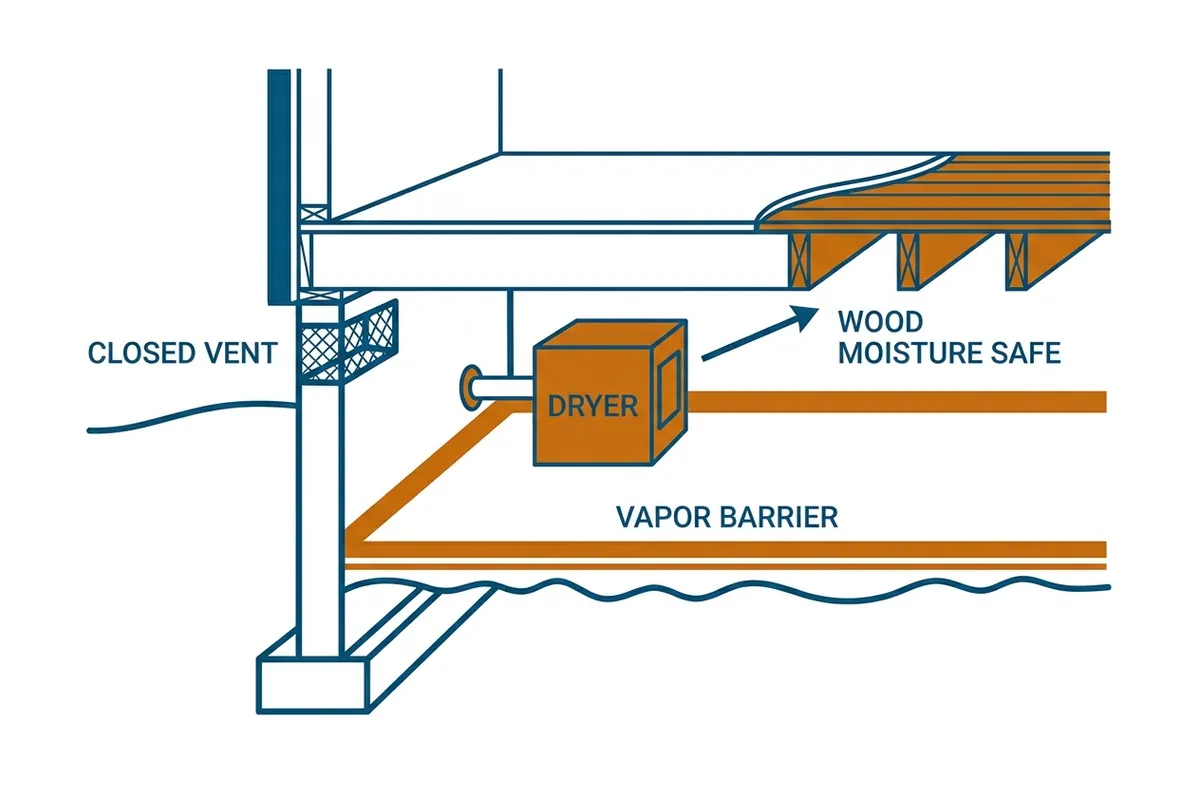
Charlotte’s Cecil-series red clay holds moisture the way the Piedmont’s whole geology does — slowly absorbed, slowly released — and bare crawl space dirt releases it upward continuously, through every season, into the framing above. That ground vapor is the crawl space’s baseline moisture load before a drop of rain or a single humid afternoon arrives, and it’s why the sealed ground barrier is the foundation of every crawl space strategy: drainage handles liquid water, dehumidification handles air, and the barrier handles the ground itself. In the country’s largest crawl space market, it’s also the most frequently botched job under Charlotte houses — which is what the next section is about.
Real barrier vs. liner — where the money actually goes
| The $500 liner | Proper installation | |
|---|---|---|
| Material | 6-mil poly, tears on contact | Reinforced 10–20 mil |
| Seams | Loose overlap | Overlapped and taped |
| Piers & walls | Cut around, open edges | Wrapped and sealed |
| Coverage | The easy middle | Everything, corners included |
| Result | Vapor routes around it | Ground supply shut off |
| Cost | Cheap twice | $1,200–$2,500 once |
Where the barrier fits the sequence
Order decides outcomes under a house. Standing or arriving water first — drainage and grading at $1,500–$4,000 where needed, because plastic over a pond is a tarp. Ground vapor second: the sealed barrier. Air humidity third — this is the Piedmont, and vented crawls breathe 80%-RH air all summer, so encapsulation with sealed vents and dehumidification is often the honest endpoint, with the barrier as its first layer. Where damp has already fed growth, mold treatment precedes the sealing — wrapping an active colony preserves it. The cost guide prices every stage.
What the inspection settles first
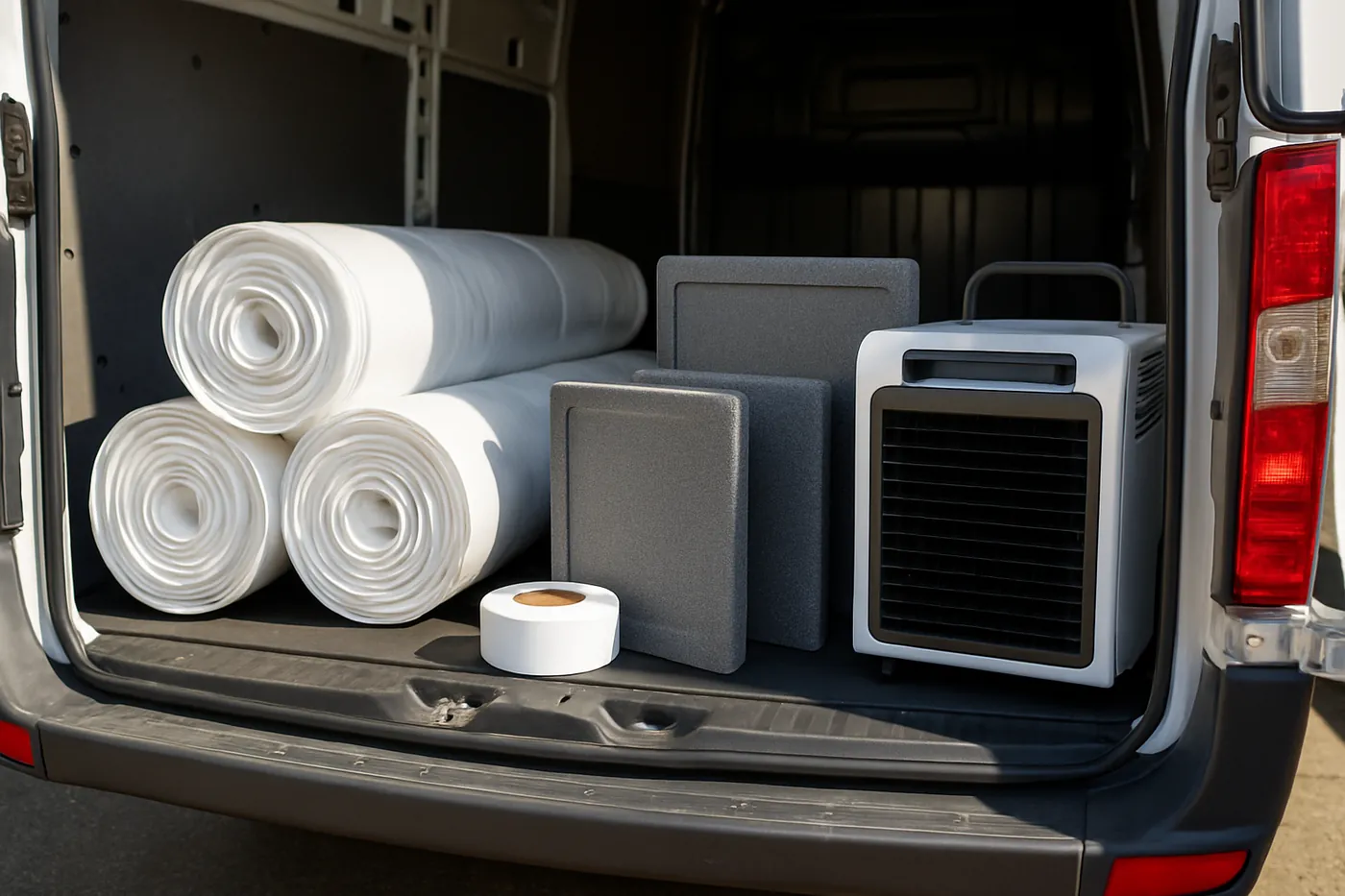
A crawl-under with moisture readings and photos: where water arrives, what the ground is contributing, what the framing’s wood moisture says, and which stage of the sequence your house actually needs — sometimes the honest answer is the barrier alone, sometimes it’s drainage first, and the written findings are yours either way. Every claim in the scope is photographed where it sits.
Keeping the barrier working
A vapor barrier is a system that anything crawling under the house can damage, which is why the annual look matters more than the product you bought. Once a year, go under with a light and check the seams and the perimeter attachment — peeled tape at a wall, a pulled seam, or a corner lifted off a pier is a small fix now and a wet crawl later. The most common cause is a service visit: plumbers, HVAC techs, and pest inspectors all work on their knees down there, so tell whoever goes under that the liner gets re-sealed before they leave. A hygrometer left in the crawl turns the whole inspection into a number you can read from the doorway.
Vapor barrier questions, straight answers
What does a vapor barrier actually do?
It stops the ground from humidifying your house. Bare crawl space dirt releases moisture continuously — gallons a day under a typical Charlotte footprint — and NC research measured vented Piedmont crawls above 80% RH through spring and summer. A sealed ground barrier cuts that supply at the source; everything else in crawl space work builds on it.
What separates a real barrier from a plastic liner?
Weight, sealing, and coverage. A real installation uses reinforced 10-20 mil material, runs seams overlapped and taped, seals to piers and walls, and covers everything — because moisture finds any gap. The $500 version is 6-mil plastic laid loose, and it fails at every unsealed edge. The material is cheap; the sealing discipline is the product.
Vapor barrier or full encapsulation — which do I need?
The barrier is the floor of the decision, encapsulation is the ceiling. Ground moisture alone: a sealed barrier may suffice. Add vented-air humidity — the Piedmont's specialty — and encapsulation (sealed vents, conditioned or dehumidified air) earns its price. Standing water needs drainage before either. The inspection reads which case yours is.
Can a vapor barrier go over standing water?
No — and a bid that says yes is selling you a tarp over a pond. Water arriving under the house needs drainage and grading first; a barrier's job is ground vapor, not liquid water. The right sequence is water out, ground sealed, then humidity managed. Skipping step one wraps the problem in plastic.
What does vapor barrier installation cost in Charlotte?
Proper installation runs $1,200-$2,500 for most homes — reinforced material, sealed seams, pier wraps, full coverage. Where drainage has to come first, that work runs $1,500-$4,000. The distance between this and the classified-ad price is the sealing; ask any bidder, including us, how seams and piers are handled.
Get a free Charlotte crawl space inspection
Tell us what you're noticing — smells, humidity, floor bounce, a wet crawl — and we'll schedule an inspection with photos of what we find. We reply the same business day.