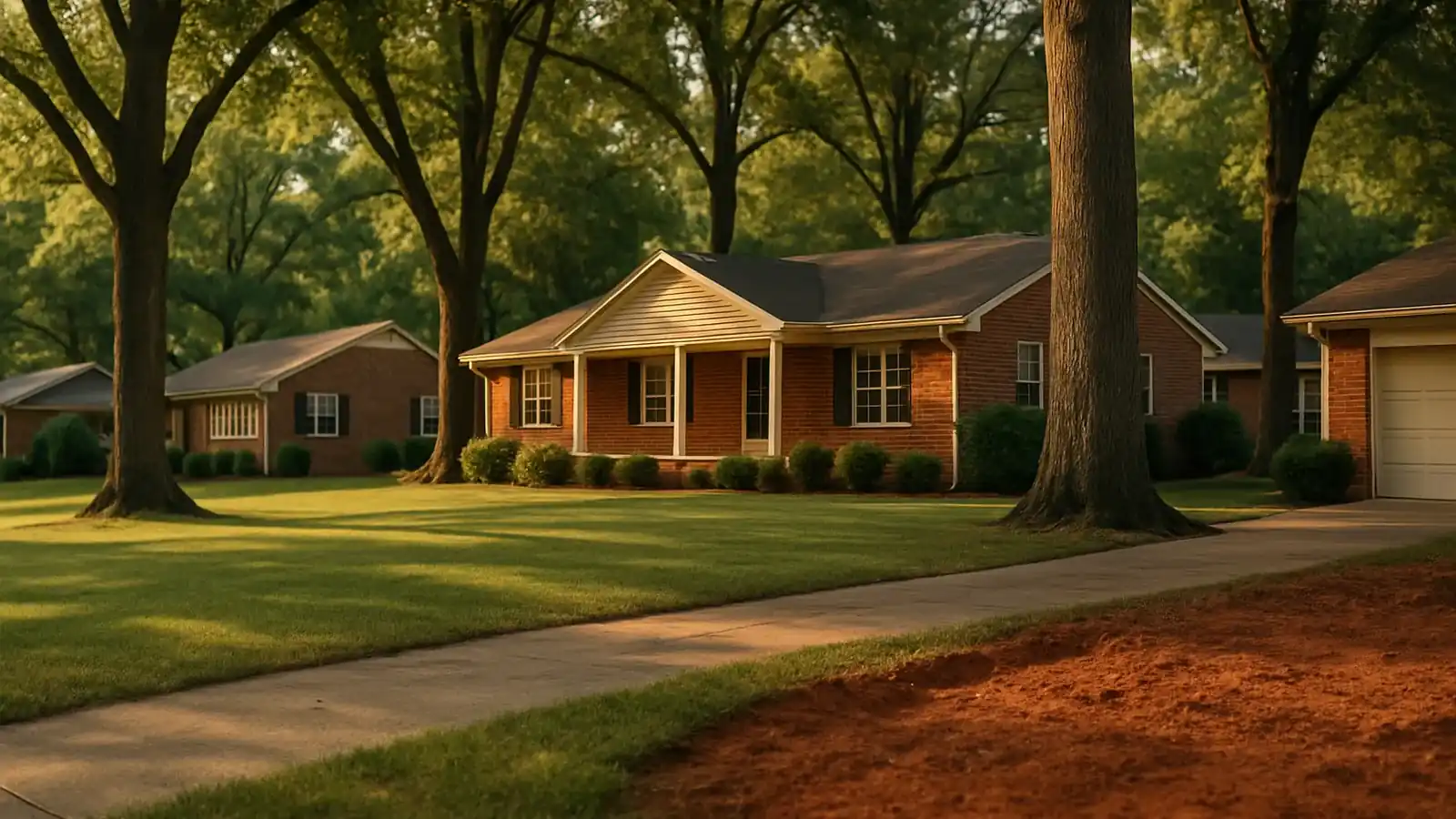
Charlotte Crawl Space Co. serves the metro's arcs: Charlotte plus Matthews, Mint Hill, Pineville, Indian Trail, Stallings, Belmont, Mount Holly, Gastonia, and Huntersville, and a good inspection there takes readings.
Choose your community
MatthewsMint HillPinevilleIndian TrailStallingsBelmontMount HollyGastoniaHuntersville
Every town we cover, and what changes there
Each of these has its own page, because the ground and the housing stock are not the same across the region. The short version:
Matthews: The 1985 vintage, aging on schedule
Matthews kept its depot-town core and grew its rings in the 80s and 90s: vented block crawls under two-stories and ranches now thirty-to-forty humid summers old. Read what that means for a Matthews property.
Mint Hill: Acreage air, identical physics
Mint Hill trades subdivision density for elbow room, but its vented crawls import the same 80% seasons as uptown's. Read what that means for a Mint Hill property.
Pineville: Mill-village bones
Pineville's core keeps its mill-town DNA: early-1900s village houses on brick piers and low crawls, built when ventilation was the theory and insulation an afterthought. Read what that means for a Pineville property.
Indian Trail: Cohort construction, cohort crawls
Indian Trail grew in waves, and its crawls age in them: subdivisions where every house shares a construction year, a grading pass, and therefore a moisture biography. Read what that means for an Indian Trail property.
Stallings: Line-straddling stock
Stallings rides the county seam with construction from the same boom decades as its Union neighbors: 1990s-2010s vented crawls, block foundations, Cecil-family clay holding the storms. Read what that means for a Stallings property.
Belmont: River-town revival, river-town air
Belmont's renaissance filled its mill-village streets and added new construction beside them. All breathing Catawba-corridor air that runs a note moister than the inland metro. Read what that means for a Belmont property.
Mount Holly: West-bank vintage
Mount Holly worked the river's west bank through the textile century, and its housing remembers: mill-village streets on pier crawls, mid-century infill on vented block, newer growth climbing away from the water. Read what that means for a Mount Holly property.
Gastonia: Mill-city scale, ranch-ring standard
Gastonia carries the west's full stock: the textile city's village streets, extensive 1950s-70s ranch rings, and newer growth toward the interstate. Read what that means for a Gastonia property.
Huntersville: North-arc stakes
Huntersville anchors the northern boom: substantial 1990s-2010s construction running toward Lake Norman, bigger footprints with bigger crawls, and property values that make under-floor condition real money. Read what that means for a Huntersville property.
One capital, ten chapters
The crawl capital reads locally: Matthews' mid-ledger 80s stock, Indian Trail's early-window cohorts, Pineville's mill-village piers, the Catawba towns' corridor air, Gastonia's ranch rings, Huntersville's lake-margin stakes. Each page reads its chapter; the inspection reads your crawl. Between towns? Ask: metro travel should be quoted honestly.
Red clay county by county
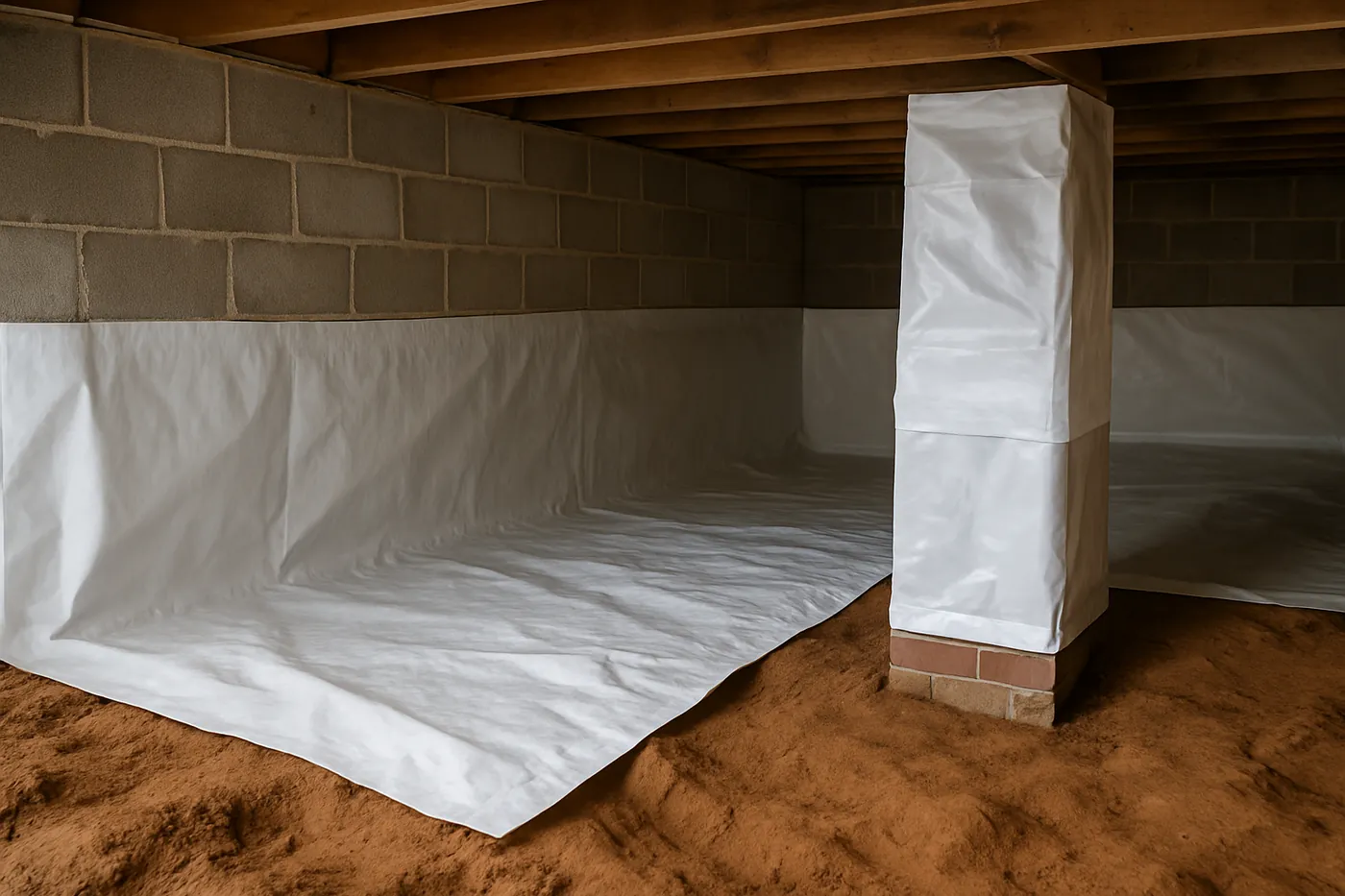
The ring around Charlotte works one soil (Cecil-series red clay) through three local plots. The close-in towns (Matthews, Mint Hill, Pineville) carry the metro's mid-century vented-crawl stock: framing with fifty-plus humid summers banked, where inspection means reading the wood's history before pricing its future. The Union County corridor (Indian Trail, Stallings) boomed recently enough that its crawls are younger but its lots are rawer: builder grading and immature drainage patterns still finding their water paths. And the Gaston-side river towns (Belmont, Mount Holly, Gastonia) add slope: Catawba-basin lots that shed storm water fast and concentrate it where the grade says, which makes drainage design the first conversation. Huntersville rounds the ring north with a mix of both eras. Each town page reads its own plot; the inspection reads your specific lot.
What it means when we say we cover a town
It means we can pass your request to a local specialist who serves your address, just as in Charlotte. Ask for moisture readings and photographs from under the house, a written scope afterwards, and any travel charge shown as its own line. If a job is far enough out that travel is material, ask for that number before you agree to anything.
Crawl inspections take an hour or so on site, so a longer drive should not change the price of the work.
These 9 communities are the places this site covers regularly, and their ground is described page by page. That is the honest boundary: not a radius drawn on a map, but the places with enough local detail to be useful.
Coverage questions
Is there an extra charge to come out to the outlying towns?
Ask the specialist whether travel applies, and ask to see it as its own line before agreeing to anything. A charge folded into the price of the work is hard to check, because a scope you cannot read is a scope you cannot compare against anyone else's.
My address is not on the list. Is it still covered?
Usually, and it is worth asking. The list is the area this site covers regularly, not a hard boundary. Somewhere between two of these towns is almost always a yes.
Is the first visit free, everywhere on this list?
Many local specialists don't charge for the first visit, but it depends on the company, in Matthews as in Charlotte. Ask when the specialist calls, before they come out. Either way, ask for the moisture readings, photographs and written findings from under the house.
Why does the price differ between towns for the same job?
Because the ground does. Each town page above explains what changes locally, and the quote follows what the visit measures at your specific address rather than an average for the region.
Get a Charlotte crawl space inspection
Tell us what you're noticing (smells, humidity, floor bounce, a wet crawl) and we'll pass your request along for an inspection. A local specialist who serves Charlotte will call you back.