Crawl space mold treatment in Charlotte costs $1,500–$5,000 for most remediations: growth treated across affected framing, paired always with the drying that starves recurrence. At the Piedmont's 80% seasonal RH, spray-only work is a rerun; treatment-plus-dry is an ending.
The biology of a vented Piedmont crawl, honest remediation steps, and the pairing worth insisting on.
The predictable ecology
Vented Charlotte crawls supply mold's whole shopping list: spores (ambient), food (framing), and moisture past the threshold (80% seasons, per the state's own research). Growth starts over the dampest ground, follows the moisture map along joists and subfloor, and exports upstairs on the stack effect: the must that arrives with May, the allergies that ease at the beach. Nothing exotic; just the ecology the design invites. Change the conditions and the ecology starves.
Remediation, step by honest step
- Document: mapping of spread and its moisture sources, ideally with photos, so you see everything first
- Treat: growth removed and surfaces treated across affected framing, containment kept real
- Repair: spans the same moisture softened get structural work in the same campaign
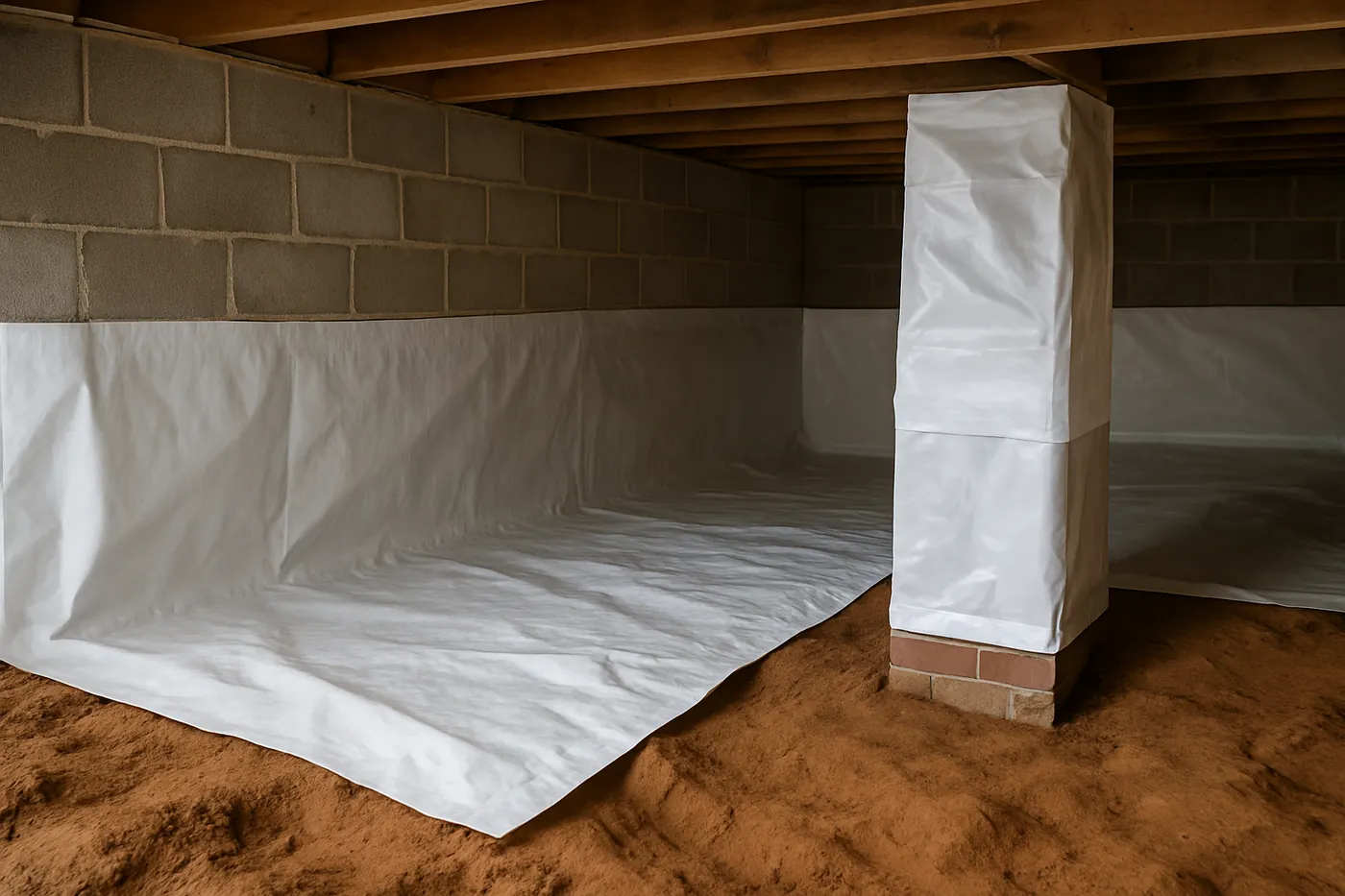
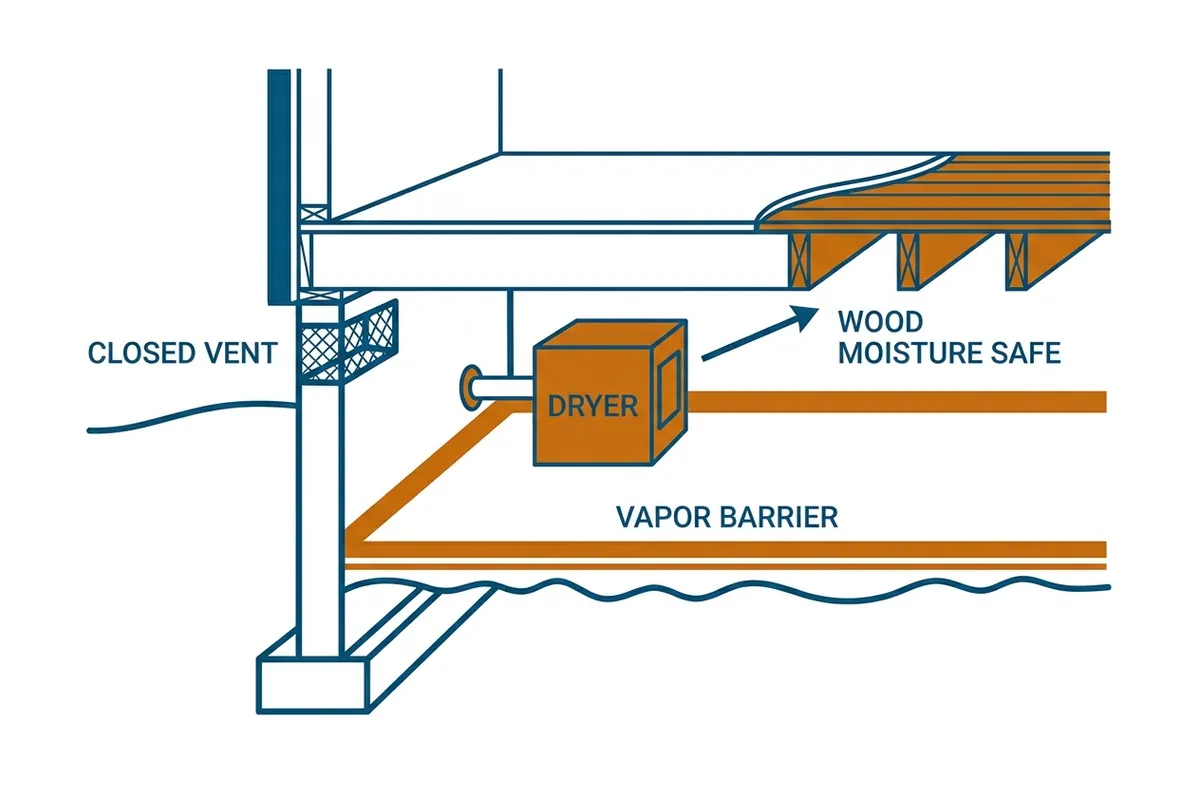
- End it: drainage where clay-held water feeds the biology, the closed-crawl system and drying bringing the space under 55%, where regrowth has nothing to work with
| Scope | Range | Note |
|---|---|---|
| Contained growth | $1,500–$3,000 | Plus its drying stage |
| Widespread involvement | $3,000–$5,000 | Often pairs with structural lines |
| Spray-only elsewhere | Rerun every 2–3 years | The subscription worth declining |
The ending, set by physics
Below 55% RH, growth can't restart, not because of any chemical, but because the water isn't there. That's why a good treatment closes with commissioning readings and a phone-visible sensor: the ending is a number you can watch hold. Treat once, dry permanently, and the must leaves the house's biography for good.
Treating growth the humidity built
Under-floor mold in Charlotte is what the measured history predicts: vented crawls that spent summers above 80% relative humidity grew what those conditions grow, and the framing carries the record. Treatment follows the sequence that makes it permanent: correct the moisture first (seal, drain, dry to the sub-65% band the closed-crawl research demonstrated), remove colonized surface growth, treat the framing that remains, and verify with moisture readings rather than appearances. Fogging a crawl that still breathes outdoor humidity is redecorating; the second summer repaints it.
A good scope separates the two halves (remediation and moisture correction) with honest pricing on each, because the correction is usually the cheaper half and always the half that decides whether you buy this work once or annually. Where framing damage crosses from staining into structure, the repair page's playbook joins the scope, documented member by member.
Mold questions, straight answers
What does crawl space mold treatment cost in Charlotte?
Most remediations run $1,500-$5,000 by spread and framing involvement: surface growth prices lower, colonized spans price alongside their structural repair. The drying that prevents recurrence is quoted in the same scope, because without it this is a subscription.
Is the crawl mold actually affecting the house above?
Its air is: a meaningful share of first-floor air rises from the crawl, spores and must riding along. Crawl growth pairs with allergy complaints that ease away from home, and treatment-plus-drying changes the whole house's air quality, not just the underside.
Why skip spray-only mold work?
Because at 80% seasonal RH it's a rerun. Killing growth without changing conditions schedules the sequel for the next humid season, so spray-only work just invoices the cycle. Ask for treatment paired with its moisture ending, in writing.
Should the mold species be tested?
When it's useful: certain health situations and transactions want lab identification, and the specialist can arrange it then. For most crawls the actionable facts are visual and measurable: where it grows, how far, and what moisture feeds it. Inspection photos can document all three.
What if the growth reached the framing's strength?
Then remediation hands off to structural repair in the same campaign: colonization and softening share a cause, and spans that probe soft get sistered or replaced while the crawl is open. One opening, one sequence, one closed ledger.
Get a Charlotte crawl space inspection
Tell us what you're noticing (smells, humidity, floor bounce, a wet crawl) and we'll pass your request along for an inspection. A local specialist who serves Charlotte will call you back.